
Strategy without intelligence is just a plan that hasn't failed yet.
A shared intelligence environment for agencies, strategy teams and firms whose decisions cannot rest on one confident read. Twelve analytical modules against a specific company, and a layer that argues with the conclusion before anyone acts on it.
Most companies do not lack strategy. They lack the intelligence underneath it.
Intrinth is strategic intelligence. Not a tool that answers a question. A practice that does the work.
Point it at a company and it produces what a strategy team would produce.
- 01The market it operates in
- 02The competitive field
- 03Who buys, and why
- 04What the economics carry
- 05Where the exposure sits
Then it reads across all of it and surfaces what no single read contains. Your firm works inside it together: named members, shared company workspaces, one body of intelligence rather than a folder each.
The intelligence that used to require a team, held by the team.
The six weeks was never the thinking.

What the time went on
A strategy engagement takes weeks because production takes weeks. Gathering, structuring, formatting, reconciling. The judgment is a fraction of it, and always was.

What changed
The production layer collapsed. Not the rigor, not the structure, not the quality of the read. The part that was never the expensive part in principle, and always was in practice.

What that leaves
Intelligence that arrives while the decision is still open. The brief is due Monday. The competitive read is needed before the pitch, not after the engagement scoped to produce it.
The intelligence, rendered.
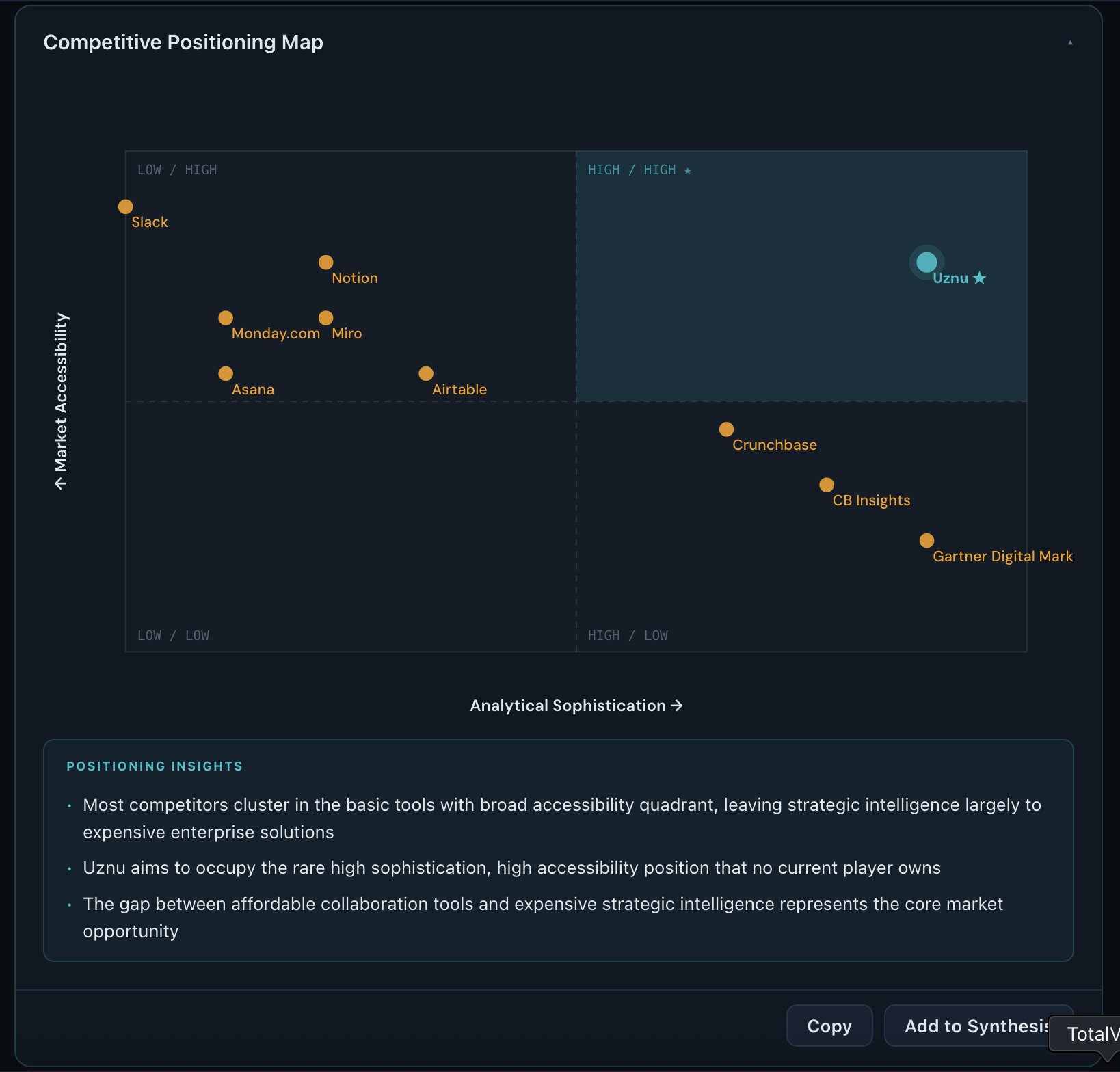
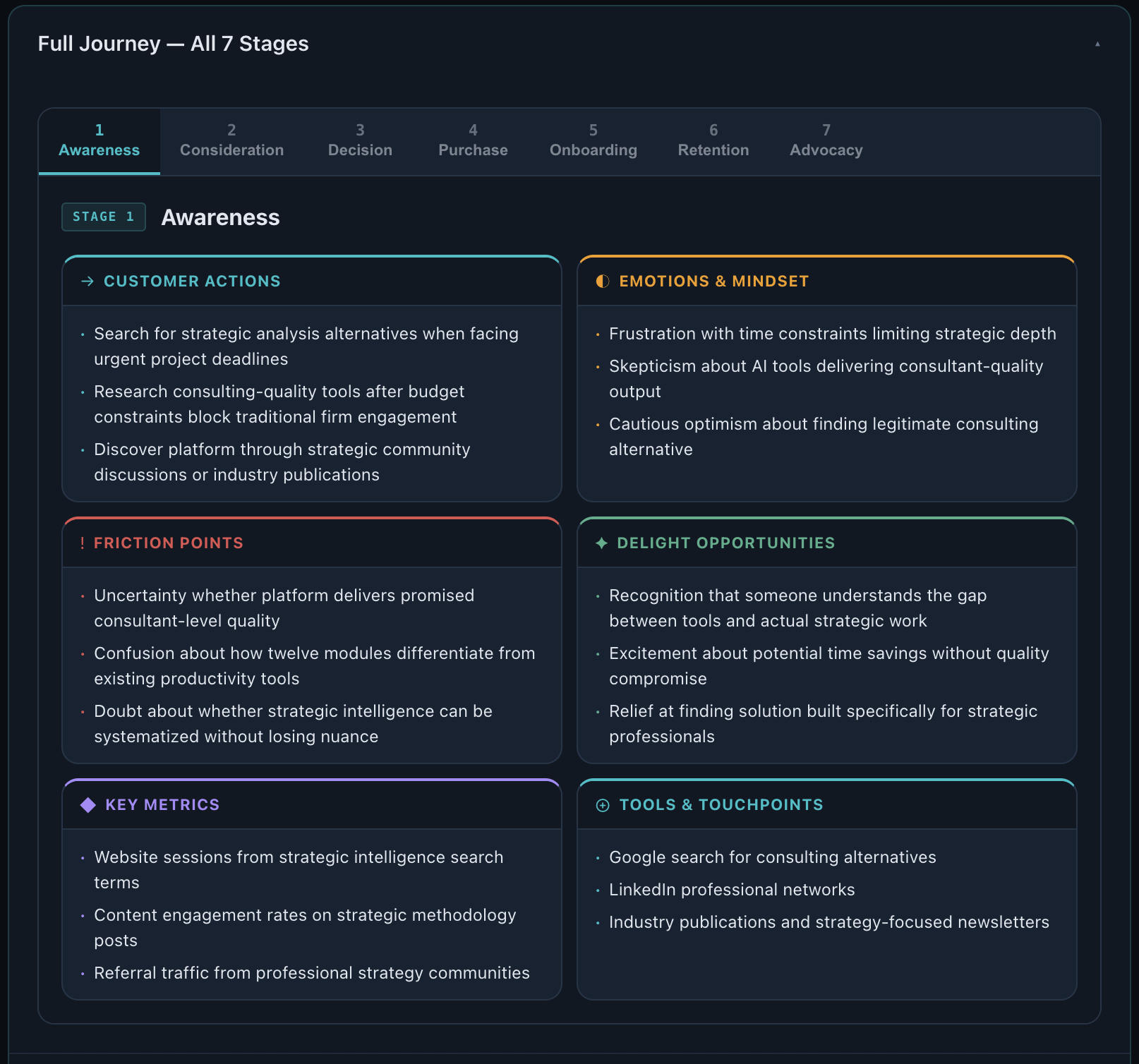
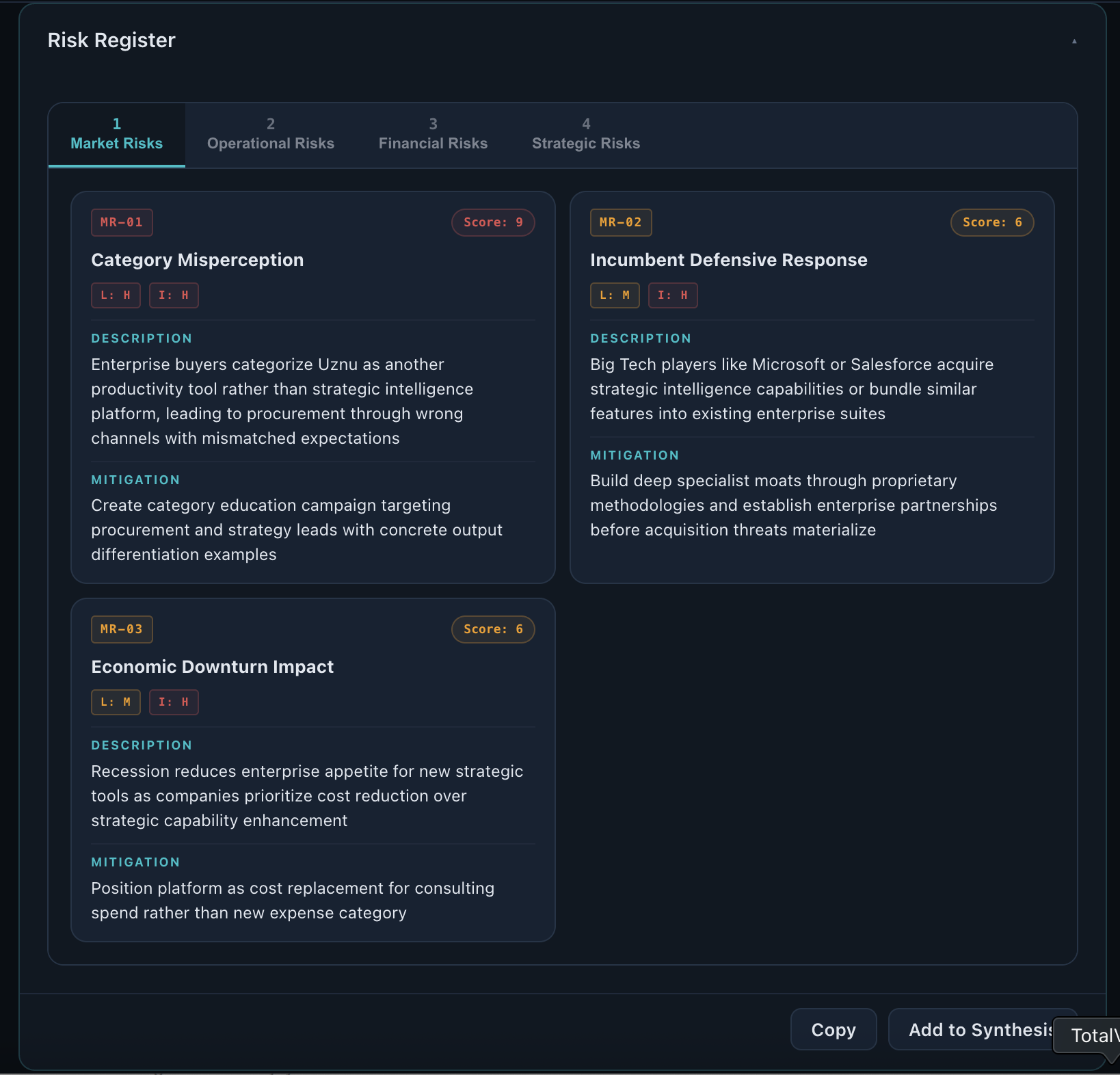
Every screenshot on this page was produced by intrinth analyzing intrinth. Its own buyer journey, its own risk exposure, and the competitive read at the top. No mockups.
Strategy rarely fails for want of an answer. It fails when the answer hardens before anyone tests it.
Every run is interrogated before it reaches the room. Four questions a confident read never asks itself, asked while the position can still change.

- Where does this contradict itself?
- What is assumed but not established?
- What does the market have wrong?
- What move follows from that?
The horizontal expansion strategy is structurally wrong. Not because the adjacent verticals lack opportunity, but because the company is attempting diversification before it has extracted monopoly-level pricing from the vertical it already owns.
Twelve modules. One connected read.
Run one when that is the question in front of you. Run the stack when the decision is larger than any single read.
Priced against what it replaces.
Intrinth is built for organizations. The alternative is a consulting engagement, not a productivity subscription.
- Named members, each with their own login
- Shared company workspaces
- All twelve modules
- ASX Intelligence on every run
- Capacity set by your agreement
You pay for the scale of the practice and the depth of the intelligence.
Start the conversationHow much longer will your strategy run on a process that takes six weeks?
Bring the firm inside one body of intelligence, before the next decision is already made.